I was admitted on 2 March 1981. I’ve done conveyancing in Queensland every year since.
45 years of Queensland property law: what’s actually changedSomeone asked me recently whether the job has changed much. The honest answer is that almost every mechanical part of it has changed completely, and the part that matters hasn’t changed at all.
Here’s what I mean.
The contract used to be a physical object
In 1981 a contract was typed. If you wanted a copy, you used carbon paper. If you made a mistake, you retyped the page.
A contract of sale physically travelled — from the agent to the buyer’s solicitor, then to the seller’s solicitor, by post or by a clerk on foot. Nobody had a fax machine yet. When the fax arrived a few years later, it felt like something close to magic, and for the next twenty years it was the backbone of the profession.
The corollary is that everything took longer and everyone allowed for it. A five-day condition meant five days of postal risk built into the calculation.
Settlement was a meeting
This is the change people find hardest to picture.
Settlement happened in a room. Four or five people — the buyer’s solicitor, the seller’s solicitor, someone from each bank — sat around a table in the city with bank cheques and documents. You checked the cheques. You handed over the title deed. Somebody handed over the keys.
If a cheque was drawn wrong, you sat there while it was redrawn. If someone was late, everyone waited. I have spent a good deal of my working life waiting in settlement rooms.
Today it happens electronically through PEXA. Funds move, the transfer registers, and I ring the client to tell them it’s done. Nobody leaves the office.
I don’t miss the settlement room. But there was something in it — you met your opposite number, you sorted out a problem across a table in two minutes that now takes four emails.
The title deed stopped being a thing you could hold
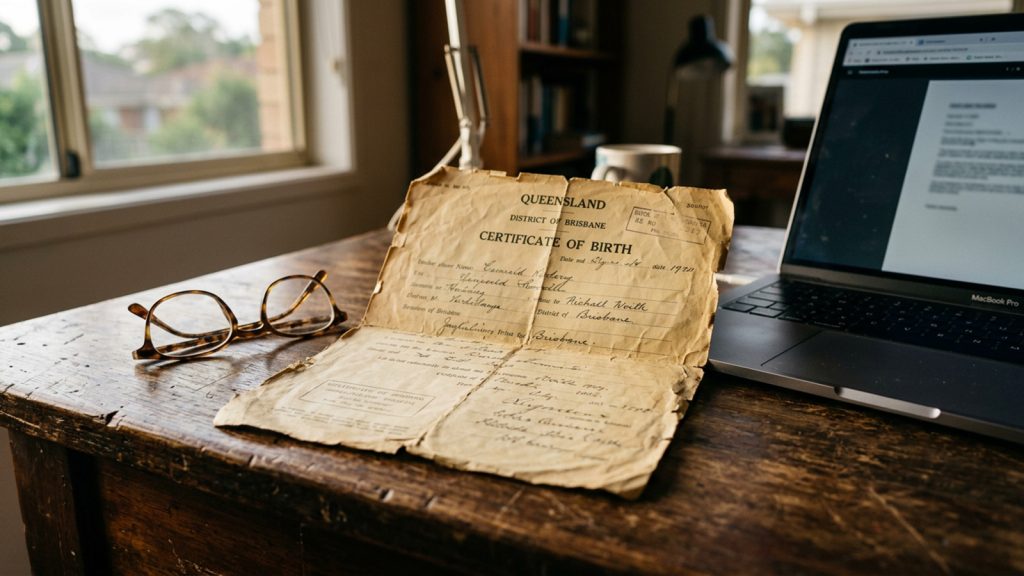
Queensland computerised the land register in 1994. From that point the electronic record was the real one, and the paper certificate of title was really just a printout of it.
But people kept them. Banks held them as security. Clients kept them in a safe, or a drawer, or occasionally a biscuit tin.
On 1 October 2019 paper certificates of title ceased to have any legal effect in Queensland. By then only about 11% of Queensland properties still had one issued.
I still get people bringing them in. They want to know if it’s worth anything, or whether they should keep it. My answer is that it isn’t worth anything legally and they should absolutely keep it. It’s the deed to your parents’ house. That’s not nothing.
Sellers now have to tell you things before you sign
For most of my career, the rule for a buyer was essentially look for yourself. There were searches, there were requisitions, but the seller wasn’t obliged to hand over much before contract.
That changed on 1 August 2025. Sellers in Queensland now have to give a buyer a formal disclosure statement — a Form 2, with a set of certificates behind it — before the buyer signs.
I think it’s a good change. It moves information to the point where it’s useful rather than the point where it’s too late.
I’d add one caution, because I’ve already had to say it several times: the Form 2 is not a building report. It tells you about title and encumbrances. It won’t tell you the roof leaks. Get an inspection.
And now we have to ask who you are
On 1 July 2026, Australia’s anti-money laundering laws were extended to solicitors. We now have to verify a client’s identity before we act on a property transaction, and keep the records for seven years.
It’s more paperwork at the start. For a firm like ours, where a lot of clients have been coming for twenty or thirty years, there’s a slight indignity in asking someone for their passport when you were at their daughter’s wedding.
But the reasoning is sound. Property is how large sums of money get made to look ordinary, and the people at the gateway to those transactions are the ones placed to notice. Australia was late to it. Most of the world has done this for years.
We’ve written a plain-English explanation of what you’ll be asked for, because the question comes up every week.
What hasn’t changed
Everything above is machinery. Faster machinery, mostly better machinery, but machinery.
What hasn’t changed is why people walk in the door.
When I was admitted in 1981, most of my clients came to me because someone they trusted had sent them. That is still true. We’ve never advertised our way to a client base — people come back, and they bring their families with them. I’ve acted on a conveyance, then a will, then an estate, and then a conveyance again for the children.
The other thing that hasn’t changed is what people actually want from a solicitor. Not brilliance. A straight answer, a fair fee, and the sense that somebody is genuinely looking after their matter.
The fax machine went. The settlement room went. The title deed went. That part hasn’t moved an inch in forty-five years, and I don’t expect it will.
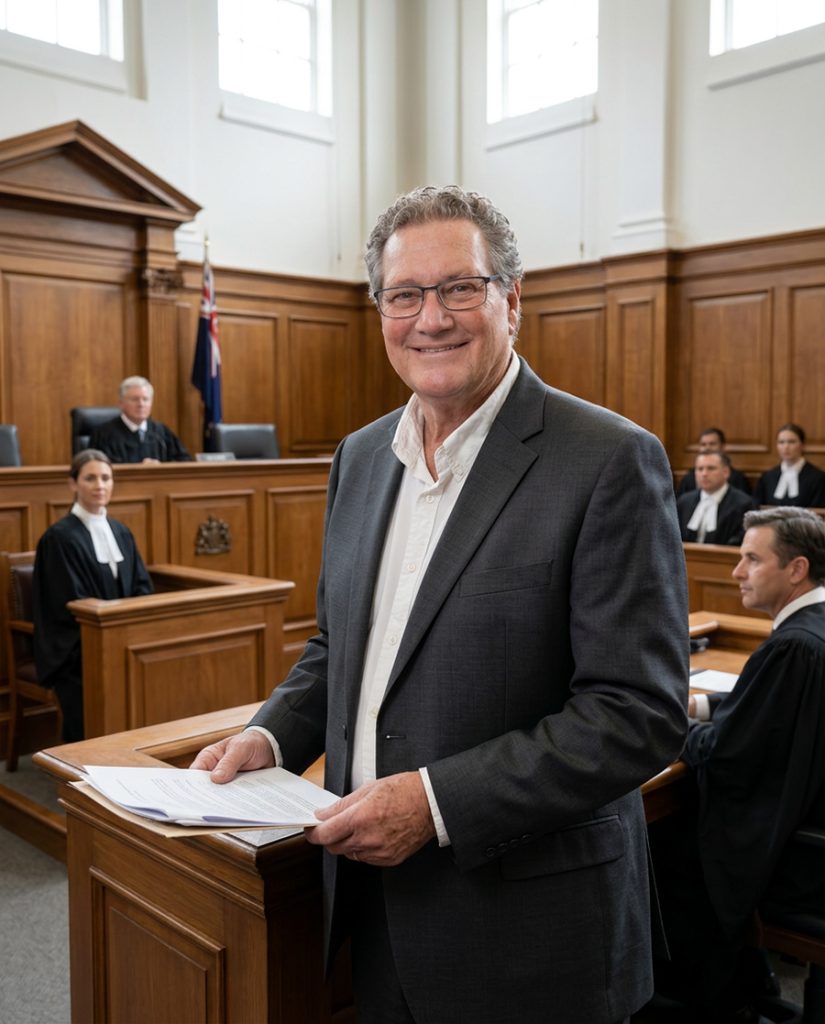
Peter Campbell is the principal of Campbells Legal in Upper Mount Gravatt. He was admitted as a solicitor in Queensland in 1981 and is a full member of the Queensland Law Society. He practises with his daughters, solicitors Mary and Madelaine Campbell.
Campbells Legal — Upper Mount Gravatt, Brisbane Phone: (07) 3849 3066 Email: solicitors@campbellslegal.com.au
Our conveyancing service → About the firm →
This article is general information only and is not legal advice. Your circumstances are specific to you — please speak with a solicitor before acting.
Liability limited by a scheme approved under Professional Standards Legislation.