Why your solicitor now needs your ID — new rules for Queensland property
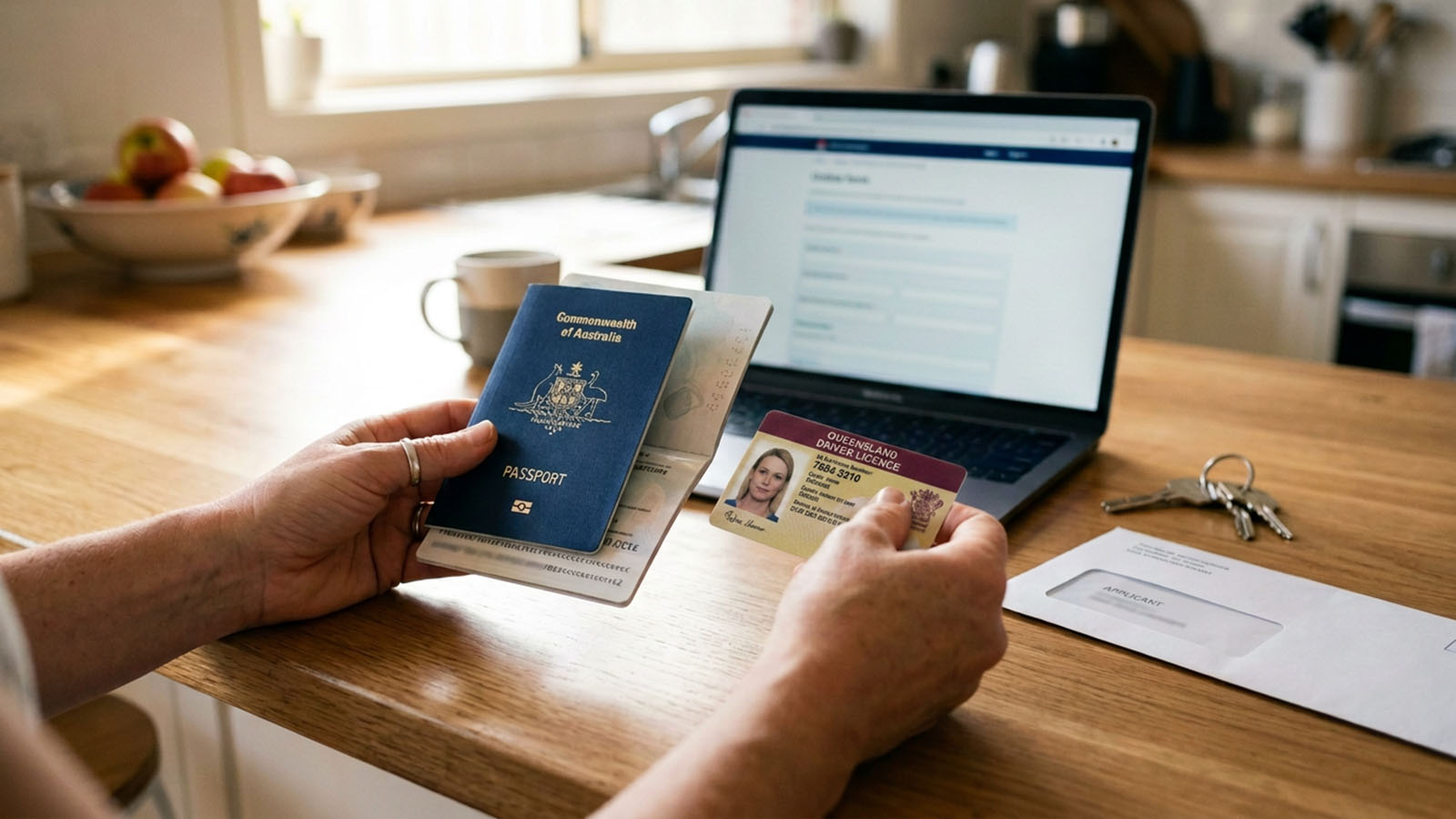
If you bought or sold a house in Queensland ten years ago and you’re doing it again now, you’re going to notice something new. Before we can start work, we have to check who you are — properly, with documents, and on file.
You might reasonably wonder why. You’re buying a house in Wishart with money from your offset account. Nobody is laundering anything.
The short answer is that we no longer have a choice. Here’s what changed, what you’ll be asked for, and how to get it out of the way without holding up your settlement.
What changed
On 1 July 2026, Australia’s anti-money laundering laws were extended to cover solicitors, conveyancers, accountants and real estate agents for the first time.
These laws have existed since 2006. Until now they applied mainly to banks, casinos and money transfer businesses. The reforms — usually called Tranche 2 — bring in a much wider group of professions. Around 90,000 Australian businesses are now covered who never were before.
Australia was one of the last developed countries to make this change. Most of the rest of the world has had these rules in place for years.
The regulator is a federal agency called AUSTRAC. Every law firm doing conveyancing in Queensland is now registered with them and has to follow the same set of rules.
Before we can start
What to have ready
Most people can complete this in a few minutes. Gather these first and it won’t hold anything up.
Buying in your own name
Usually same day
Buying in a company or trust
Allow a few days
Why property, specifically
Because property is how large amounts of money get made to look ordinary.
If someone has cash they can’t explain, one of the most effective things they can do with it is buy a house. The money goes in dirty and comes out as an ordinary suburban home with a title deed. It has been a well-documented method for a long time, and Australia’s property market has been named internationally as exposed to it.
The professions that sit at the gateway to those transactions — solicitors, conveyancers, agents — are the point at which it can be spotted. That’s the thinking behind the change. We’re not being policed; we’re being asked to keep an eye out.
For the overwhelming majority of people buying and selling homes, this means some paperwork at the start and nothing else.
What you’ll be asked for
For most individual buyers and sellers, it’s straightforward.
| What we need | What that usually means |
|---|---|
| Photo ID | Current Australian passport, or Queensland driver licence |
| A second document | Sometimes required — birth certificate, Medicare card, or a second photo ID |
| Proof of your address | A recent utility bill, bank statement, rates notice or government letter |
We’ll usually do this electronically. Most firms, including ours, use a secure verification platform rather than asking you to photocopy things and post them in. It typically takes a few minutes on your phone.
If you’re buying with a partner, each of you needs to be verified. There’s no such thing as verifying a couple.
If you’re buying through a company, trust or SMSF
This is where it gets more involved, and where people get caught out on timing.
If the buyer or seller isn’t a person — if it’s a family trust, a company, or a self-managed super fund — we have to identify the people behind it, not just the entity. The law calls them beneficial owners.
In practice that usually means:
- The company or trust’s own details and registration
- A copy of the trust deed or company constitution
- ID for the directors, trustees, or anyone who controls or owns more than 25% of it
If you’re buying in a family trust and the trust deed is in a box in the garage from 2004, find it now rather than the week before settlement. This is the single most common cause of delay we’re seeing.
“But I already did VOI last time”
You probably did — and it’s a fair question, because the two look similar.
Verification of Identity (VOI) has been standard practice in Queensland conveyancing for years. It confirms you are who you say you are for the purposes of transferring a title. It exists to stop someone selling a house they don’t own.
The new AML checks are broader. They ask a different question: not just are you who you say you are, but does this transaction make sense. Depending on your circumstances they may also require us to identify beneficial owners, sight trust deeds or company records, and keep the verification on file for seven years.
In many cases the two can be done together in a single step, so you won’t notice much difference. Where your structure is more complex, you will.
They’re related, but not the same
VOI and the new AML checks
| VOI | New AML checks | |
|---|---|---|
| The question it asks | Are you who you say you are? | Does this transaction make sense? |
| How long it’s applied | Standard in Queensland for years | Since 1 July 2026 |
| Who it covers | The person signing the transfer | You — and the people behind any company or trust |
| Documents needed | Photo ID | Photo ID, address, and trust or company records where relevant |
| Records kept | For the transaction | Seven years |
In most cases we can do both in one step. If you’re buying in your own name with a current licence, you won’t notice much difference from last time.
Timing — the part that actually matters
We cannot start work until verification is done. That’s not a firm policy we could bend if we wanted to. It’s a legal requirement, and there are serious penalties for getting it wrong.
So the practical advice is simple: if you know you’re about to buy or sell, get in touch and sort out the ID before you’re under a contract with a five-business-day cooling-off period ticking.
Most people can complete it the same day. If you’re overseas, if you’re using a company or trust, or if your documents are out of date, allow longer.
If you’ve realised your passport expired in 2023 and your licence still has your old address on it, tell us early. Those are fixable problems — but not in 24 hours.

What happens to your information
We’re required to keep the records for seven years. They’re held securely and used for this purpose only.
We’re also required to report certain things to AUSTRAC — large cash transactions, and anything that genuinely looks suspicious. In practice, for ordinary residential conveyancing, this almost never arises.
One thing worth being straight about: if we ever did have to make a report, the law prevents us from telling you. That’s not a comfortable thing for a firm that prides itself on straight answers, so we’d rather you heard it from us than discovered it somewhere else. It changes nothing about how we act for you.
What we’re actually looking out for
Not you. To be clear about that.
The things that draw attention are structural rather than personal — unusually complex ownership arrangements for a simple home purchase, funds arriving from a source that doesn’t fit, a property bought and re-sold in quick succession at a very different price, or a buyer who seems oddly uninterested in the property itself.
If you’re buying a home to live in with money you earned, none of this touches you. You’ll do the ID check and never think about it again.
Common questions
Do I have to do this even though I’ve been a client for 20 years? Talk to us and we’ll tell you what’s needed for your particular matter. The rules apply to the service being provided, not to how long we’ve known you — but if we’ve verified you recently, that may be enough.
Can I just email a photo of my licence? Sometimes, but electronic verification is usually faster and more secure. We’ll tell you which applies.
Does this apply if I’m just refinancing? It applies to a range of property and financial services, not only purchases and sales. Ask us about your specific matter.
What if I’m overseas when the contract is signed? Verification can be done remotely. Tell us early so we can set it up — it takes longer from outside Australia.
Is my agent doing this too? Yes. Real estate agents were brought into the same regime on the same date. You may find you’re asked for ID more than once by different parties. Annoying, but each of us has to hold our own records.
Will this delay my settlement? Only if it’s left late. Done at the start, it adds no time at all.
Don’t leave this to the last week
We can’t start work until the ID check is done
That isn’t a firm policy we could bend — it’s a legal requirement. If your passport has expired, your licence still shows an old address, or the trust deed is somewhere in the garage, those are fixable problems. They’re just not fixable in 24 hours. Sort it before you’re under contract with a cooling-off period running.
Get your ID sorted early →Talk to us
If you’re buying or selling on Brisbane’s south side and want the ID side sorted before you’re under contract, give us a call. It takes a few minutes and it’s one less thing to worry about later.
Campbells Legal — Upper Mount Gravatt, Brisbane Phone: (07) 3849 3066 Email: solicitors@campbellslegal.com.au
Read about our conveyancing service → Get in touch →
This article is general information only and is not legal advice. Your circumstances are specific to you — please speak with a solicitor before acting.
Liability limited by a scheme approved under Professional Standards Legislation.